Quick answer
Use the space you already have first: the vanity cabinet with a two-tier organizer, the counter with one small tray, and the back of the bathroom door. Then add one freestanding piece, like a slim rolling cart beside the sink or an over-the-toilet shelf. Keep daily items within reach and move backups out of the bathroom.
In this guide
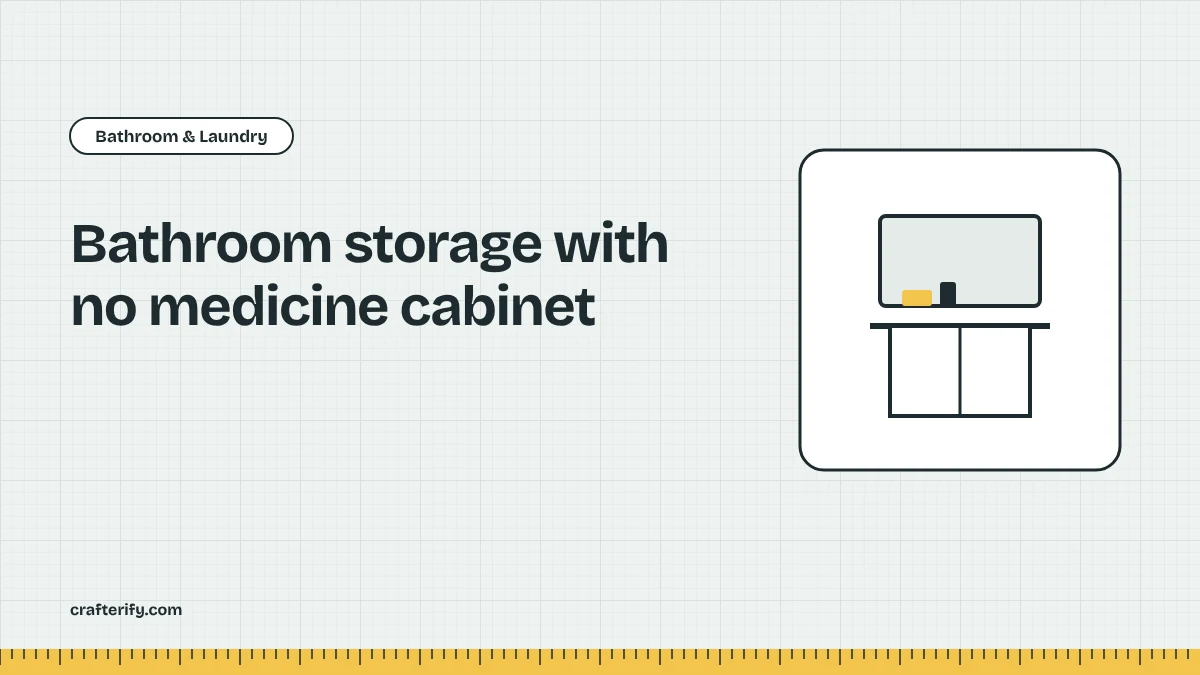
A medicine cabinet does a lot of quiet work. Without one, toothbrushes, skincare, razors and medicine end up spread across a tiny sink counter, and every morning starts with moving things around.
In a rental you usually can’t add a mirror cabinet, since most mount into the wall. But there are plenty of ways to get that storage back without a drill.
Sort before you store
Bathroom clutter is mostly duplicates and things nobody uses. Take everything out and sort it:
- Daily: toothbrush, toothpaste, face wash, deodorant, a hairbrush.
- Weekly: razors, nail clippers, a hair tool.
- Occasional and backup: extra toothpaste, spare shampoo, first aid items.
- Old and expired: sunscreen and medicine past their date, products you stopped using.
Throw out the last group. Check local guidance for getting rid of medicine; many pharmacies have take-back programs.
Make the vanity cabinet do more
The cabinet under the sink is usually the biggest storage space in a small bathroom, and it’s often set up as one dark pile. Treat it like the under-kitchen-sink cabinet:
- A two-tier sliding organizer on one side of the drain pipe.
- Clear, narrow bins for categories like hair, first aid and cleaning.
- A small turntable for bottles, so the back ones don’t get lost.
Measure the space on each side of the pipe, and the door opening, before you buy. Some vanities have a center stile between the doors that narrows the opening.
Keep the counter to one tray
If you only have a small strip of counter, give the daily items one tray and nothing else. A tray makes it easy to wipe the counter and stops things from spreading.
What goes on the tray: toothbrushes, toothpaste, hand soap and maybe one product you use twice a day. Everything else lives in a drawer or cabinet.
Add a slim cart beside the sink
A rolling cart made for narrow gaps can slide between the vanity and the toilet or the wall. Many are 5 to 8 inches wide and hold small bottles on several levels.
Check:
| Measure | Why |
|---|---|
| The gap width at its narrowest | The cart has to slide in without scraping |
| The gap depth | So it doesn’t stick out past the vanity |
| The height up to the counter edge | So it slides under any overhang |
For a little more space, a standard three-tier utility cart (around 16 by 12 inches) can hold towels and supplies if you have a corner.
The back of the door
The bathroom door is usually free space. Over-the-door options include:
- Hooks for towels and robes.
- A clear pocket organizer for small items like hair ties, travel bottles and nail tools.
- A narrow basket rack for bottles and backup supplies.
Close the door slowly with it in place to check it clears the frame and doesn’t hit a towel bar.
Over-the-toilet shelving
The wall above the toilet is often unused. A freestanding over-the-toilet unit stands on the floor around the toilet and gives you two or three shelves without anything going into the wall. We cover how to measure for one in our over-the-toilet storage guide.
Store medicine somewhere else
It may seem odd, but the bathroom isn’t the best place for medicine. Heat and humidity from showers can affect some medicines, and many labels say to store them in a cool, dry place. A bin in a bedroom closet or a kitchen cabinet, away from the stove, works well. If kids live with you or visit, keep medicine up high or in a locked box.
Mirrors without a cabinet
If you also need a mirror, a freestanding vanity mirror on the counter or a leaning mirror elsewhere can help. Some landlords allow an over-the-door mirror on the bathroom door, which hangs on hooks and needs no tools.
Common mistakes
- Buying more organizers than space. Small bathrooms fill up with containers that hold very little. Start with one or two pieces.
- Keeping backups in the bathroom. Extra shampoo and toothpaste take the space the daily items need.
- Ignoring the humidity. Cardboard boxes and paper packaging get soggy. Clear plastic bins with lids hold up better.
- Blocking the outlet. Keep the outlet by the sink easy to reach for hair tools, and never leave them plugged in near water.
A sample setup for a small bathroom
- One tray on the counter with toothbrushes, toothpaste and hand soap.
- A two-tier sliding organizer on one side of the vanity pipe, for daily skincare and hair products.
- Three labeled bins on the other side, for first aid, cleaning and backups.
- An over-the-door organizer with hooks for towels and pockets for small items.
- A slim rolling cart beside the vanity, if there’s a gap.
FAQ
What can you use instead of a medicine cabinet?
A two-tier organizer in the vanity, one tray on the counter, a slim rolling cart beside the sink and an over-the-door organizer. Most small bathrooms need two or three of these.
Where should you keep medicine if not in the bathroom?
In a cool, dry spot like a bedroom closet or a kitchen cabinet away from heat. Keep it out of reach of children.
Can you add a medicine cabinet in a rental?
Surface-mounted cabinets screw into the wall, so you’d need your landlord’s permission. Freestanding and over-the-door options don’t.