Quick answer
For light frames and hooks, use removable adhesive strips rated for the weight, on clean, smooth, painted walls. For heavier things, lean them on furniture or the floor, or use over-the-door hooks. Clean the wall with rubbing alcohol first, press firmly, and wait before hanging. Stay well under the weight rating, and avoid textured walls, fresh paint and wallpaper.
In this guide
Renters want art on the walls and hooks by the door like anyone else. The worry is the move-out inspection. Here’s what actually works without nails, and what to watch out for.
The main options
| Method | Holds | Works best on | Removal |
|---|---|---|---|
| Removable adhesive strips | Light to medium frames, per package rating | Smooth painted walls | Pull the tab straight down, slowly |
| Adhesive hooks | Keys, towels, light bags | Smooth painted walls, tile | Same as above |
| Leaning on a shelf or floor | Heavy and large art, mirrors | Any room | Just move it |
| Over-the-door hooks | Coats, bags, towels | Doors with a small gap at the top | Lift off |
| Tension rods | Curtains, light baskets | Between two solid walls | Twist to loosen |
| Freestanding shelves and racks | Almost anything | Floor space | Move it |
Adhesive strips and hooks: how to make them hold
Removable adhesive products work well when they’re used the way the package says. Most failures come from skipping a step.
- Check the weight. Weigh the frame on a kitchen or bathroom scale. Stay well under the rating, ideally using more strips than the minimum.
- Clean the wall. Wipe the spot with rubbing alcohol and let it dry. Household cleaners can leave a residue that stops adhesive from sticking.
- Press firmly. Hold each strip against the wall for about 30 seconds.
- Wait before hanging. Many brands recommend waiting about an hour before adding weight. Follow the time on your package.
- Keep out of humidity and heat unless the product says it’s made for bathrooms or outdoors.
Surfaces to avoid
Adhesive doesn’t like every wall. Skip it on:
- Textured walls, like popcorn or heavy orange-peel finishes. The strip can’t make full contact.
- Fresh paint. Wait at least a week after painting, or longer if the package says so, or it can pull the paint off.
- Wallpaper and vinyl. The adhesive can tear it when removed.
- Brick, concrete and unfinished wood.
- Flat or matte paint in poor condition, which can peel with the strip.
If you’re not sure, test one small strip somewhere hidden, like inside a closet, and remove it after a few days.
How to remove adhesive strips cleanly
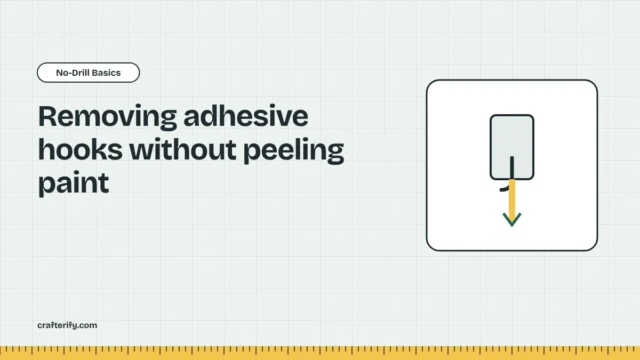
This is where most damage happens. The trick is to pull the tab straight down along the wall, slowly, stretching it, not pulling it out toward you. Pulling outward is what tears paint. See our full guide to removing adhesive hooks without damage.
Lean instead of hang
For heavy or valuable pieces, leaning is the safest choice:
- Large mirrors lean against the wall on the floor. Put a non-slip pad under the bottom edge.
- Framed art can lean on a dresser, console or bookshelf. Layer two or three frames of different sizes for a casual look.
- A narrow picture ledge is the exception, since most need screws. Ask your landlord if you want one.
Leaning pieces can slide or fall if bumped, so keep them away from doors and walkways, and anchor tall mirrors if kids or pets are around.
Over-the-door hooks
Doors are a no-tools wall. Over-the-door hooks and racks work on most interior doors with a small gap at the top. They’re good for coats, bags, towels and even a full-length mirror. Check that the door still latches with the hook in place.
Tension rods
Tension rods hold light things between two walls: a curtain in a window frame or an alcove, a row of baskets in a cabinet, or a short rack in a closet. They’re rated by weight and length, and they hold less as they get longer.
What about small nail holes?
Some leases and landlords treat a few small nail holes as normal wear and tear; others charge for them. Read your lease or ask. If you get the okay, small nails leave tiny holes that are easy to fill with spackle when you move out.
A quick decision guide
Not sure which method to use? Go by weight and value:
- Under a pound or two, like a small print or a key hook: removable adhesive hook or strip, rated for at least twice the weight.
- A few pounds, like a framed print: several adhesive strips, following the package rating, on a smooth wall.
- Heavy, large or valuable, like a big mirror or framed art with glass: lean it, or ask your landlord about proper hardware.
- Anything that will be pulled on, like a coat hook you use daily: over-the-door hooks or a freestanding coat rack.
Common mistakes
- Guessing the weight. A framed print with glass can weigh far more than it looks. Weigh it.
- Skipping the alcohol wipe. Dust and grease are the main reason adhesive fails.
- Hanging right away. Adhesive needs time to bond before it takes weight.
- Using bathroom air for regular strips. Steam weakens adhesive not made for humidity.
- Hanging over a bed or sofa. If something falls, it falls on someone. Lean art behind a sofa or on a ledge instead.
FAQ
What’s the most weight you can hang without nails?
It depends on the product. Check the package rating and weigh what you’re hanging. For anything heavy, lean it or use furniture instead.
Do adhesive strips damage walls?
They usually come off cleanly from smooth, sound paint when removed correctly. They can pull off paint on fresh, textured or poorly painted walls.
How do you hang a mirror without drilling?
Lean a floor mirror against the wall with a non-slip pad, or use an over-the-door mirror.