Quick answer
Buy a rod whose length range covers your measurement in the middle of its range, not at the very end. Use it between two solid, parallel surfaces, keep loads light and check the weight rating. Good uses: curtains in window frames and alcoves, hanging spray bottles under the sink, a second closet rod, dividers in cabinets and a shower caddy for hand towels.
In this guide
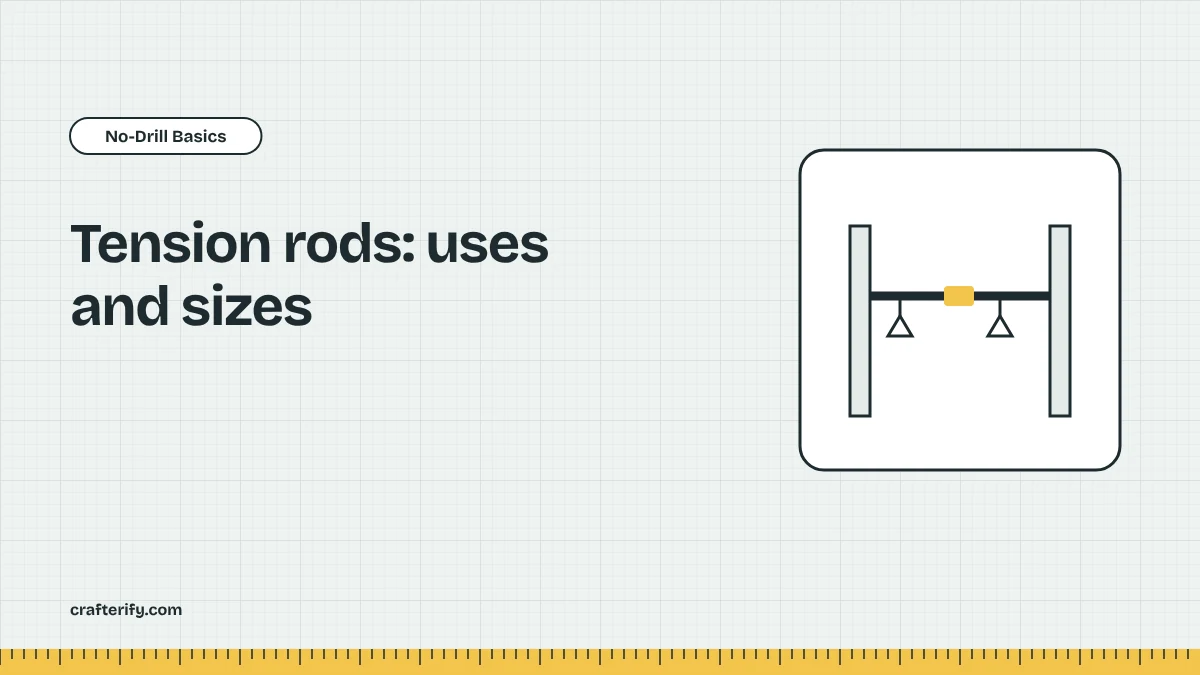
A tension rod is a spring-loaded or screw-adjusted rod that holds itself in place by pushing against two surfaces. No screws, no holes, and it comes with you when you move. In a rental, it’s one of the most useful things you can own.
It also has limits. Knowing them is what keeps your curtain from falling in the middle of the night.
How to choose the right size
Tension rods are sold by length range, like 28 to 48 inches. Measure the space wall to wall, then pick a rod where your measurement falls in the middle of the range.
Why the middle? Near the short end, the rod can be hard to compress enough to fit. Near the long end, it has less grip and sags more.
| Your space | Look for a range like |
|---|---|
| 15 in (cabinet) | 12 to 20 in |
| 30 in (window frame) | 24 to 40 in |
| 48 in (closet) | 36 to 60 in |
| 70 in (alcove or shower) | 54 to 90 in |
Measure in a couple of places. Walls and window frames are rarely perfectly straight, and you want the rod where the gap is the same on both ends.
Spring vs. twist rods
- Spring tension rods compress and then push out. They’re quick to install and best for light jobs like cafe curtains or cabinet dividers.
- Twist or screw tension rods tighten by turning the rod, which creates more pressure. They hold more weight and work better for longer spans and closet rods.
For anything carrying real weight, choose a twist rod made for heavier use and check its rating.
10 places to use one
- Inside a window frame for a cafe curtain or a light privacy panel.
- Across an alcove with a curtain to hide a clothes rack or create a bed nook.
- Under the kitchen sink, near the top, to hang spray bottles by their triggers.
- In a closet, as a second rod below the main one, if the height allows it and the load is light.
- Vertically in a cabinet as dividers for baking sheets and cutting boards.
- Across a shower or tub alcove for a curtain, or hooks for a loofah.
- Inside a deep drawer as a divider.
- Under a shelf in the pantry to hang bags or a small basket with S-hooks.
- Across a laundry closet to hang clothes from the dryer.
- Behind the sofa between two walls in a narrow room, with a curtain as a soft divider.
Why tension rods slip
If your rod keeps falling, it’s usually one of these:
- Too much weight. Long rods hold much less than short ones. Lighten the load or switch to a heavier-duty rod.
- The wrong size. A rod at the end of its range has little grip.
- Uneven or slippery surfaces. Glossy tile and painted trim can be slick. Rubber end caps help.
- Hollow walls. Drywall can flex under pressure, letting the rod loosen. Set the rod against a stud or a window frame if you can.
- Humidity and temperature. Bathrooms make rods expand and contract. Check and retighten now and then.
Some people add a rod support or a small piece of rubber shelf liner under the end caps for extra grip.
Will it damage the wall?
Usually not much, but rubber end caps can leave a mark or ring on paint, especially flat or soft paint. A damp cloth or a soft eraser removes most marks. Don’t over-tighten, which can dent drywall.
What not to use one for
- Heavy coats or a full closet’s worth of clothes.
- Blackout curtains on long spans. They’re heavy and the rod will sag.
- Anything over a bed or where a falling rod could hurt someone.
- Grab bars or anything you might put your weight on. Tension rods are not designed to support a person.
How to install one so it stays put
- Measure at the exact height where the rod will go, not just at the floor or the top.
- Extend the rod slightly longer than the space if it’s a spring rod, then compress it to fit. For a twist rod, set it a little short and twist to tighten.
- Check it’s level. A tilted rod puts uneven pressure on each end and slips more easily.
- Tighten firmly, until it holds when you tug gently downward. Don’t crank it so hard that it dents the wall.
- Add the load gradually and check it after a day.
For long spans, a center support, sold separately for some rods, helps stop sagging.
Which rod for which job
| Job | Rod type | Notes |
|---|---|---|
| Cafe curtain in a window frame | Spring | Short span, light load |
| Cabinet dividers | Spring, small | Vertical use, very light |
| Spray bottles under the sink | Spring or twist | Keep it in front of the pipes |
| Closet second rod | Heavy-duty twist | Solid walls, light clothes only |
| Shower or alcove curtain | Twist | Rust-resistant finish in a bathroom |
FAQ
How much weight can a tension rod hold?
It depends on the rod and its length. Check the package rating. Shorter spans and twist-style rods hold more.
How do you stop a tension rod from falling?
Choose a size with your measurement in the middle of its range, tighten it fully, keep the load light and add rubber pads to the ends.
Can you use a tension rod in a closet?
Yes, for a light second row of shirts, if your walls are solid and you stay under the weight rating.