Quick answer
For a room with no closet, combine one piece for hanging and one for folded clothes. A garment rack (about 18 to 24 inches deep) is the cheapest and most flexible; a freestanding wardrobe hides everything but needs about 22 to 24 inches of depth. Add a dresser or a cube shelf for folded items, and a curtain on a tension rod if you want to hide a rack in an alcove.
In this guide
Some older apartments and converted buildings have bedrooms with no closet at all. Others have one closet for the whole apartment. Either way, your clothes need somewhere to go that doesn’t involve building anything.
The good news is that freestanding storage has come a long way. The trick is choosing the right mix for your room size and how much of your wardrobe hangs versus folds.
Count what you hang and what you fold
Before buying anything, sort your clothes into two piles: things that need a hanger (shirts, dresses, jackets, suits) and things that fold (T-shirts, sweaters, jeans, workout clothes).
A rough guide: one adult’s everyday hanging clothes usually take 3 to 4 feet of rod space. If you have a lot of dresses or coats, plan for more.
The options compared
| Option | Typical depth | Hides clothes | Best for |
|---|---|---|---|
| Open garment rack | 18 to 24 in | No | Low cost, easy to move |
| Rack with cover | 18 to 24 in | Yes | Dust protection on a budget |
| Freestanding wardrobe | 22 to 24 in | Yes | A tidy look and a mix of hanging and shelves |
| Open closet system (shelves + rod) | 14 to 20 in | No | Turning a wall or alcove into a closet |
| Dresser | 16 to 20 in | Yes | Folded clothes |
| Cube shelf with bins | 12 to 16 in | Mostly | Folded clothes and accessories |
The depth matters because it’s the floor you give up. Hanging clothes need about 22 to 24 inches to hang straight, so anything shallower than that will make clothes hang at an angle.
Garment racks
A sturdy rolling rack is the most flexible choice. You can move it, add a second one later, and take it with you.
What to look for:
- A weight rating that covers your clothes with room to spare. Cheap racks bend when loaded with coats.
- Locking wheels, or no wheels if it will stay put.
- A shelf at the bottom for shoes or bins.
- An adjustable height if you hang long dresses or coats.
The downside of an open rack is that it’s always on display. Keep it tidy by using matching hangers and putting it where you won’t see it from the bed or the door.
Freestanding wardrobes
A wardrobe gives you a closet with doors, and many have a hanging section plus shelves or drawers. They look neat and keep dust off your clothes.
Check two things before buying:
- Depth. At 22 to 24 inches, a wardrobe takes a lot of floor in a small room. Measure where it will go and how far the doors swing open.
- Tipping. Wardrobes are tall and can be top-heavy. Most come with an anti-tip strap that attaches to the wall. Ask your landlord about using it, and keep heavy things in the lower part.
Fabric wardrobes are a lighter, cheaper option. They’re a metal frame with a zip-up cover, and they’re easy to take apart when you move.
Make an alcove into a closet
If the room has a nook or an alcove, you can turn it into a closet with no construction:
- Put a freestanding closet system or a garment rack in the alcove.
- Hang a curtain in front of it on a tension rod, if the alcove is narrow enough for one.
- Add a cube shelf or bins on the floor for folded clothes.
Tension rods work best across short spans between solid walls. Check the rod’s length range and weight rating, and stick to a light curtain.
Dressers and cube shelves for folded clothes
Folded clothes take less depth than hanging ones, so they’re where you can save space.
- A tall dresser holds a lot while using little floor.
- A cube shelf with fabric bins is cheaper and lighter. It can also work as a nightstand or a low room divider.
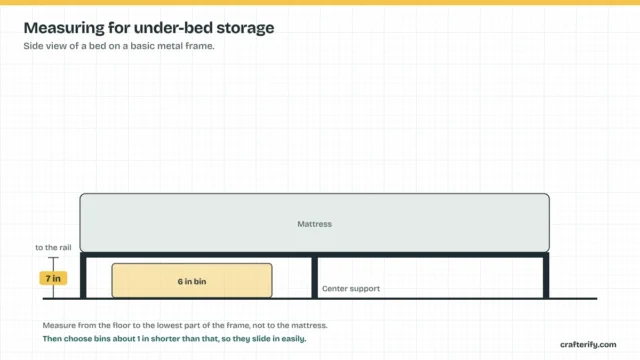
- Under-bed storage handles off-season clothes and extra bedding.
Folding clothes vertically in drawers, standing up in rows instead of stacked, lets you see everything and fit more in each drawer.
Putting it together in a small room
For a typical small bedroom with no closet:
- One garment rack or fabric wardrobe for hanging clothes, in the corner farthest from the door.
- A tall dresser or cube shelf for folded clothes.
- Under-bed bins for off-season clothes.
- A few over-the-door hooks for robes and bags.
That covers most people’s clothes in about 6 to 8 feet of wall.
Common mistakes
- Cheap racks for heavy coats. They bend and wobble. Check the weight rating.
- Wardrobes that don’t fit the room. Measure the depth and the door swing before ordering.
- Everything on display. An open rack full of mismatched clothes makes a small room look messy. Matching hangers and a cover help.
FAQ
What can I use instead of a closet?
A garment rack or freestanding wardrobe for hanging clothes, plus a dresser or cube shelf for folded clothes. A curtain can hide a rack in an alcove.
How deep does a clothes rack need to be?
About 18 to 24 inches. Clothes on standard hangers need 22 to 24 inches to hang straight.
Do wardrobes need to be attached to the wall?
Tall wardrobes should be secured against tipping. Most include an anti-tip kit. In a rental, ask your landlord before attaching anything, and keep heavy items low.