Quick answer
Measure the depth from the back wall to the inside edge of the door frame. Under about 22 inches, standard hangers won’t hang straight, so shift the closet toward shelves: hang a fabric shelf organizer from the rod, use the floor for a shoe rack or drawers, and keep only flat or thin clothes on hangers. None of it needs a drill.
In this guide
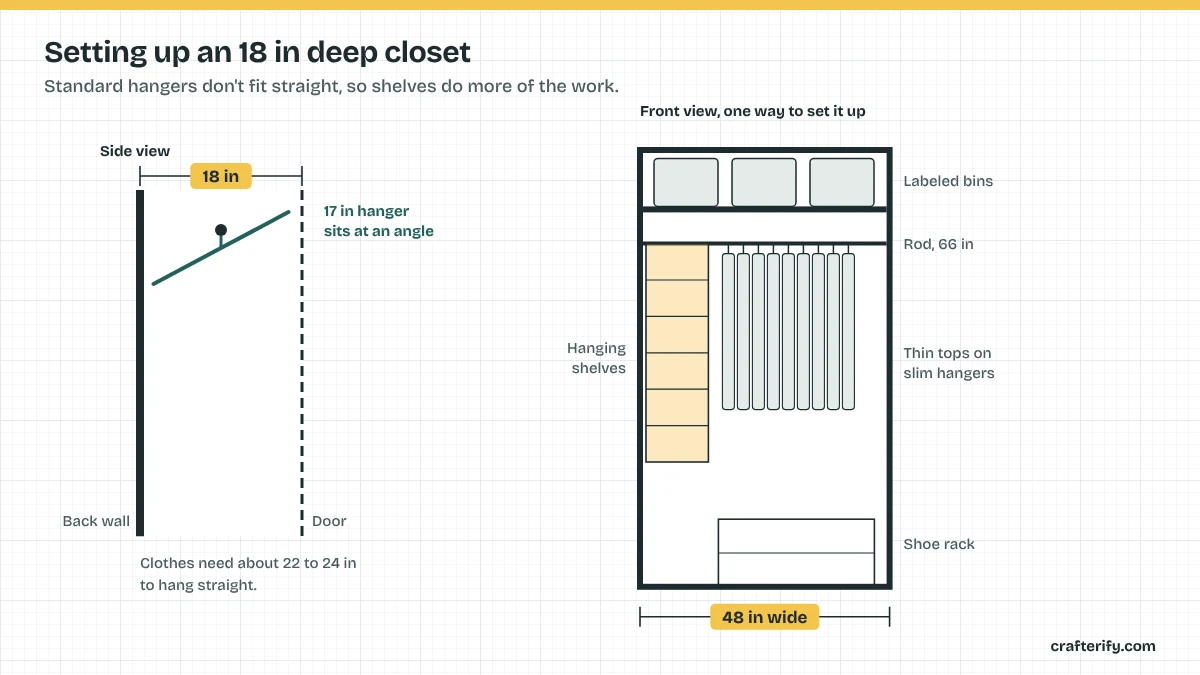
A lot of older apartments have closets that look normal until you hang a winter coat and the door won’t close. The problem is depth. Most adult hangers are about 17 inches wide, and once you add the bulk of a jacket’s shoulders, clothes need around 22 to 24 inches of space front to back to hang flat.
If your closet is shallower than that, you don’t need a carpenter. You need to stop treating it like a full closet and set it up for what it can actually hold.
Measure these four things first
Grab a tape measure before you buy anything. Online closet organizers list their sizes, and the difference between “fits” and “almost fits” is usually an inch.
- Usable depth. Measure from the back wall to the inside edge of the door frame, not to the door itself. The frame lip is often 1 to 2 inches narrower than the inside of the closet, and that’s what your bins have to pass through.
- Opening width. Measure the width of the door opening and the width inside. Bifold doors also eat about 4 to 6 inches on each side when they’re folded open.
- Rod height. Floor to the top of the rod. This decides whether a second rod can fit below it.
- Shelf depth. Most top shelves in older closets are 12 to 16 inches deep.
Write the numbers on your phone. You’ll check them more than once.
What fits at each depth
This is a rough guide. Your clothes matter too. A rack of T-shirts behaves very differently from a rack of puffer coats.
| Usable depth | What works on the rod | What to add instead |
|---|---|---|
| Under 15 in | Very little hangs well | Shelves, bins and a hanging shelf organizer |
| 15 to 19 in | Smaller hangers, thin tops, hung at a slight angle | Hanging shelf organizer, shoe rack, door storage if the door swings out |
| 20 to 22 in | Standard hangers for shirts and dresses | Move coats and bulky jackets to a hook rack or another closet |
| 23 in and up | Most clothes, including coats | A regular closet setup works |
Set up the rod for thin clothes only
In a shallow closet, the rod is valuable space, so give it to the clothes that actually need hanging: button-down shirts, dresses, and lightweight blouses.
Here’s what helps:
- Smaller hangers. Junior or kids’ hangers run about 14 to 15 inches wide. They’re fine for knits and T-shirts. Skip them for structured blazers, since they can leave bumps in the shoulders.
- Thin hangers. Flocked or “slim” hangers save width along the rod, not depth. They’re still worth it because you’ll fit more on a short rod.
- Hang at a slight angle. If your hangers brush the door, rotate them a little. You’ll lose a few inches of rod length but the door will close.
Coats are the hardest part. If you have a second closet, an entryway, or room for a freestanding coat rack, move them there. A shallow bedroom closet isn’t going to hold them well no matter how you arrange it.
Add a hanging shelf organizer
This is the single most useful thing for a shallow closet. A fabric hanging organizer clips or Velcros over the rod and drops a column of shelves down from it. Most are around 12 inches deep, which fits easily in a closet that can’t take a hanger.
Use it for folded jeans, sweaters, T-shirts and workout clothes. A five- or six-shelf version holds a surprising amount, and you can unhook it and move it when you leave.
Two things to watch:
- Check the width. A 12-inch-wide unit leaves more rod for hanging; a 24-inch-wide one holds more folded clothes. Pick based on whether you fold or hang more.
- Don’t overload it. These hang from the rod, so a full stack of heavy jeans can bow a thin rod over time.
Add a second rod only if the height allows it
A heavy-duty tension rod between the side walls can create a second hanging level, sometimes called double hanging. Whether it works depends on how high your main rod is.
Shirts and folded pants need about 38 to 40 inches of hanging space. So a double-hang setup usually puts the top rod around 80 inches from the floor and the lower one around 40 inches. If your closet already has a high rod like that, a tension rod at about 40 inches doubles the space for shirts.
Many rental closets have a single rod closer to 66 inches, with a shelf above it. At that height there isn’t room for two rows of shirts, so skip the second rod and use the space under short clothes for a shoe rack or a small drawer unit instead.
If you do add a tension rod:
- Look at the weight rating on the package and stay well under it. Tension rods hold far less than a screwed-in rod.
- Set it between solid walls. Hollow drywall can flex and let the rod slip.
- The rubber ends can leave a faint mark on flat paint. A damp cloth usually takes it off when you move out.
Use the floor and the shelf
The floor of a shallow closet is easy to waste. A two-tier shoe rack that’s 12 to 13 inches deep fits under short hanging clothes and keeps shoes from piling up against the door.
On the top shelf, use bins that are a little shorter than your shelf depth so they don’t hang off the edge. Label the front of each one. You won’t remember what’s in the back corner bin in six months.
What about the door?
It depends on the door:
- Hinged door that swings out: over-the-door hooks or a pocket organizer work well. Check that the hooks don’t stop the door from closing. Some need a small gap at the top of the door.
- Sliding doors: skip door storage. Anything on the door blocks it from sliding past the other panel.
- Bifold doors: also skip it. The panels fold against each other, so there’s nowhere for anything to hang.
Before you buy anything
Go through the closet first. In a small space, the cheapest way to make room is to take out what you don’t wear. Anything off-season can go in an under-bed bin, which frees up rod space for what you use now.
Then buy one thing at a time, starting with the hanging shelf organizer. Live with it for a week before adding more.
FAQ
How deep does a closet need to be for regular hangers?
About 22 to 24 inches lets most adult clothes hang straight with the door closed. Shirts can get by with a little less. Coats usually need the full 24.
Can I install a front-to-back closet rod in a rental?
Pull-out and front-to-back rods exist, but nearly all of them screw into the wall or shelf. Ask your landlord first, and check your lease for rules about holes.
What size hangers fit a 16-inch-deep closet?
Junior hangers, about 14 to 15 inches wide, will usually hang straight. Standard 17-inch hangers will need to sit at an angle.
Will a tension rod hold clothes?
A heavy-duty tension rod can hold a short row of shirts or other light items. It won’t hold the same load as a mounted rod, so keep heavy coats and jeans off it.