Quick answer
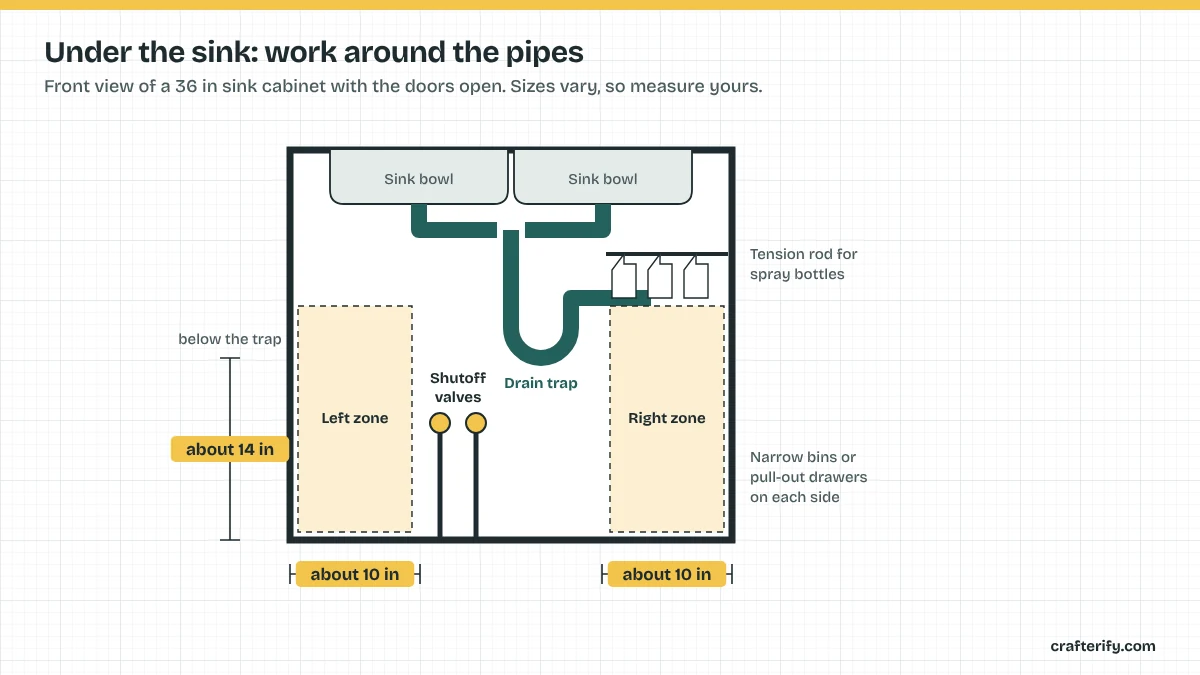
Measure the space on each side of the drain pipe, the height below the pipe, and the width of the door opening. Then use two narrow bins or pull-out drawers on the sides, a tension rod across the top to hang spray bottles, and a waterproof liner on the floor of the cabinet. Keep the shutoff valves easy to reach.
In this guide
The cabinet under a kitchen sink is usually the messiest cabinet in the house, and it’s not your fault. The drain pipe runs right down the middle, the shutoff valves stick out of the back wall, and if there’s a garbage disposal it takes up a big chunk of the top. Most organizers are sold as if none of that is there.
The fix is to work around the plumbing instead of against it.
Know what’s in there
A typical sink base cabinet is 30 to 36 inches wide and about 24 inches deep on the outside. Inside, you lose some of that to the cabinet walls and the face frame. Here’s what usually sits inside:
- The P-trap: the U-shaped bend in the drain pipe, normally near the center.
- Shutoff valves: two small handles on the back wall or floor for hot and cold water.
- Garbage disposal: if you have one, it hangs under one side of the sink and drops down 12 inches or more.
- Dishwasher connections: a supply line and drain hose, often running to one side.
- A center stile: a vertical strip of wood between the two doors on many cabinets. It narrows the opening even though the inside is wider.
Measure these five spots
Your under-sink measurements
- Width of the left zone, from the cabinet wall to the nearest pipe
- Width of the right zone, the same way
- Height from the cabinet floor to the bottom of the trap
- Depth from the back wall to the inside of the face frame
- Width of the door opening, including the center stile if you have one
Number 5 is the one people miss. A bin that fits inside the cabinet is useless if it won’t fit through the door.
Use the two side zones
Each side of the trap usually leaves a column about 8 to 12 inches wide. That’s a good fit for:
- Narrow pull-out drawers. Freestanding sliding drawers sit on the cabinet floor and don’t need to be screwed in. Check the depth so the drawer fully opens past the face frame.
- Tall, narrow bins for dish soap refills, sponges and dishwasher pods.
- A small stacking drawer unit on the side without the disposal, if the height allows two levels.
Put the things you grab every day, like dish soap and sponges, in the front of whichever side you reach for first.
Hang bottles from a tension rod
This is the cheapest trick and it works in almost every cabinet. Put a small tension rod across the cabinet, side to side, near the top and toward the front. Hang spray bottles on it by their triggers.
It gets the tallest items off the floor and leaves the floor for bins. Keep the rod in front of the pipes so it doesn’t press on anything, and don’t hang anything heavy from it.
Try a U-shaped organizer
Some two-tier organizers are made with a cutout or adjustable shelves that go around the drain. They can be a good fit, but only if your trap sits roughly in the middle. If the pipe is off to one side, or there’s a disposal, two separate side units usually work better than one shaped to a layout you don’t have.
The cabinet door
The inside of the door is useful space if the door has room to close:
- Over-the-door caddies hook over the top edge. Make sure the hooks don’t stop the door from shutting, and that the caddy doesn’t hit the sink bowl when the door closes.
- Adhesive hooks hold dish gloves and a small brush. Check the weight rating and stick them on a clean, dry surface.
Keep items on the door flat. Anything deep will run into the pipes or the bins behind it.
Protect the floor of the cabinet
Small leaks under sinks are common and easy to miss. A waterproof cabinet liner or a shallow tray on the floor catches drips and makes them easier to see. If you notice a damp spot, tell your landlord early. A slow drip is a simple fix; a soft, swollen cabinet floor is not.
Two rules for safety
- Don’t block the shutoff valves. If a pipe leaks, you need to reach them fast. Leave a clear path to both.
- Lock it if kids are around. Most cleaning products live here. If young children visit or live with you, add a child safety latch or move cleaners up high. Many latches stick on with adhesive and don’t need screws.
FAQ
What should you not store under the kitchen sink?
Anything that’s damaged by water, like paper towels in the original plastic or cardboard, and anything you’d hate to lose in a leak. Avoid storing a big supply of chemicals together in an enclosed space.
How do you organize under a sink with a garbage disposal?
Treat the disposal side as short storage. Use low bins or a single drawer under it, and put your taller items on the other side of the trap.
Do under-sink organizers need to be screwed in?
Many don’t. Freestanding drawers, bins, trays and tension rods all work without screws. Some pull-out systems that mount to the cabinet floor do need them, so check before you buy for a rental.